Thursday, January 2, 2014
We've Moved!
Lovely Vegan Ladies has moved to it's own site now- www.lovelyveganladies.com! Find and follow us here for all the new updates, posts, and more from LVL. See you soon Lovelies!

Saturday, December 7, 2013
Vegan in a nutshell
Hello Lovelies!
This is just a short post for you newbies to veganism:
What does vegan even mean?

This is just a short post for you newbies to veganism:
What does vegan even mean?
veg·an
ˈvēgən,ˈvejən/
noun
- 1.a person who does not eat or use animal products."I'm a strict vegan"
Being vegan means you do not consume or purchase any products that come from animals. It's big step further than vegetarian. No meat, dairy, eggs, or products that are tested on animals.
It also means eating a whole, plant based diet with colorful plates and tasty flavors. Your plates should look like rainbows! :)

It also means eating a whole, plant based diet with colorful plates and tasty flavors. Your plates should look like rainbows! :)

Interested in going vegan? Here's a link to great site to help you get started: http://www.mindbodygreen.com/0-952/PlantBased-Diet-for-Beginners-How-to-Get-Started.html
My suggestion is that you just try swapping out one meal a day for a vegan one and slowly transition to adding another meal each week or each month. Go at your own pace; don't guilt yourself into it- 'cause then it's not fun!
I've also listed out a starter grocery list for the vegan newbies out there that you can utilize here: Becoming Vegan: Your Starter Grocery List.
This article on reading food labels is particularly helpful when at the store purchasing food products:
To avoid products that are tested on animals, look for these labels on your health/beauty products:

For myself, being vegan means I'm living a life that does not cause any harm to the animals on this planet. I can live a life surrounded by love and hope, cruelty-free. It's opened my eyes up to some sad ways of the world, given me a new view of nutrition, and my taste buds have come to love quite a few new foods.
For more updates and information on veganism, follow our blog, tumblr twitter, instagram, pinterest, like us on Facebook- however you prefer, we're available everywhere. :)
Happy Vegan Days Lovelies!
Sunday, December 1, 2013
Becoming Vegan: Your starter grocery list
Hello Lovelies!
Hubby and I were recently talking about the road to veganism and how intimidating it can be at first. With that in mind, I decided to write this post. I hope you enjoy!
For those that are interested in becoming vegan, the grocery store can suddenly become a scary place if you aren't prepared. It can also become very expensive if you go straight for all of the vegan substitutes out there. If you keep your lists and your diet simple, you don't have to burn a whole in your pocket to become vegan.
Below is a list of basic items I think every vegan should always have on hand. When you're at the store, check the label for everything. Click here for a fantastic article on what to avoid when reading label.

Hubby and I were recently talking about the road to veganism and how intimidating it can be at first. With that in mind, I decided to write this post. I hope you enjoy!
For those that are interested in becoming vegan, the grocery store can suddenly become a scary place if you aren't prepared. It can also become very expensive if you go straight for all of the vegan substitutes out there. If you keep your lists and your diet simple, you don't have to burn a whole in your pocket to become vegan.
Below is a list of basic items I think every vegan should always have on hand. When you're at the store, check the label for everything. Click here for a fantastic article on what to avoid when reading label.
- Almond, soy, rice, or coconut milk (I prefer Almond milk; my hubby prefers Very Vanilla Soy Milk by Silk)
- Vegan butter- Earth Balance or Smart Balance Light w/Flaxseed Oil (cheaper option)
- Bananas- great to add to Oatmeal, baked items, frozen and blended as an ice cream, or just for a snack!
- Apples- make apple sauce, use as an egg replacement when baking sweets, or snack time!
- Oranges- I love to make homemade orange juice. Check out some juicing recipes here.
- Carrots- Enjoy in juices, salads, stir fry dinners, or just as a quick snack
- Spinach- Wonderful green addition to smoothies!
- Onions- Ummm, perfect for anything?! Right? :)
- Potatoes: russett and yams- Especially around the holidays
- Veganaise- optional*
- Tofurkey Deli style meat- optional*
- Daiya Cheese- optional*
- Nut Butters- Peanut, Almond, Tahini
- Bread
- Brown Rice
- Beans- Try them all! Black, Garbanzo, Pinto, the list goes on and on....
- Lots of Fruits and Veggies- I highly suggest trying a new fruit or vegetable once a week until you are familiar with all your grocer or local farmers market has to offer
- Quick Oats
- Vitamin B-12- Plant based products do not produce B-12, therefore it is highly important that vegans supplement this vitamin. Please view the link!
- Soy sauce
- Whole grain cereals- Make sure to check the ingredients!
- Granola- Breakfast or on the go snack
- Whole wheat flour
- Vegetable Broth
*These items are substitutes for items we would normally buy on the typical American diet. These types of items are what will rack up your grocery bill in a heartbeat. As a new vegan, you may enjoy these products during your transition phase, but I encourage you to lean more towards whole, unprocessed, natural foods as you journey further into veganism.
Where to shop: Whole Foods, Central Market, Sprouts, any natural grocer, farmers market, or local grocery store (though natural/health food stores are preferred).
How vegan do you want to be? The stores listed above also have vegan beauty and health products that are cruelty free. These items can also be a bit more expensive, but if you have the funds to do so, you're doing a great justice for the animals in the world. Keep a look out for these symbols on the bottle:

Becoming a vegan doesn't have to be crazy expensive or an over dramatized experience. It can be a fun, experimental process. If you find yourself craving a non-vegan dish, start googling. It's very easy to find vegan versions of dishes all over the web. You may find vegan versions you like quite a bit more than the standard version!.
If you are already a vegan and have a constant item you get at the grocery store, please share and let me know what all you use it for! I'd love to hear your experience!
-Cali
Tuesday, November 26, 2013
Just in time for Thanksgiving: Vegan Apple and Pumpkin Pie Recipes!
Happy Thanksgiving Lovelies!
Fall/Winter has always been my favorite time of the year, partially because my birthday is this month, but more so because I looooove to cook!
Some of my non-negotiable recipes for Thanksgiving are:
Sweet potato casserole, Green bean casserole, Mac N Cheeze, Vegan Fluffy Rolls, and some sort of dessert. This year I'm going to be trying a new green bean casserole recipe along with an additional recipe- this tasty Pumpkin Lasagna with a Creamy Basil sauce!
If you follow me on Instagram (@lovelyveganladies),
you probably saw my delicious pies I posted last night. ;)


I've never made a pie before this year so I was very excited to try my hand at it. I cheated a little bit with the apple pie, because I just bought a pie filling at the grocery store. The crust is homemade though so I'll be happy to share that portion. I'm proud to say that the pumpkin pie is completely from scratch! So, without further adieu, RECIPES. :)
Apple Pie Recipe
**Crust:
2 cups all purpose or pastry flour
tsp salt
1 1/2 cup vegan margarine (I used Smart Balance: Light w/Flaxseed Oil)
1/2 cup Almond milk (other milk substitutes can be used as well)
In a food processor, mix the flour and salt together. Add the margarine and pulse until the mixture resembles a coarse meal. Add almond milk and blend until well combined and dough forms. Remove dough, roll into a two dough balls and wrap in plastic. Refrigerate for 1 hour before using.
Preheat your oven to 425 degrees. Take out the dough and with rolling pin, roll one of the balls out into a 10-11 inch circle. Gently lay the dough into a 9 inch baking pan (it will droop over the edges). Roll out the second ball into more of a rectangular shape. You'll want to cut out 14 strips of dough about 10 inches long and about an inch thick. Pour your apple pie filling (I used Lucky Leaf Premium Apple Pie Filling) and spread it evenly. Begin laying your strips over the filling. I started in the middle and wove on strip over and under another to get the look pictured above. Bake the pie for 35-40 minutes. Let it sit for 5-10 minutes before serving.
**Pumpkin Pie Recipe
This recipe is quicker to make than the apple pie, simply because you do not have to refrigerate the dough.
Crust:
1/2 cups flour
1/2 tsp salt
1/2 cup oil
1 tsp cider vinegar
2 tbsp sugar
3 tbsp ice water
In a medium bowl, mix together the flour, salt, and sugar. Add the oil, vinegar, and water and stir until well blended. Press into your 9 inch baking pan.
Filling:
1 14-oz can unsweetened pumpkin puree
1/2 cup almond milk
1/4 cup cornstarch
1/2 cup maple syrup
1/2 tsp salt
1/4 cup sugar
1 tsp ground cinammon
1 tsp ground ginger
1/4 tsp allspice
1 tsp vanilla extract
Preheat oven to 375 degrees. In a food processor, blend together all of the filling ingredients until smooth. Pour pumpkin mixture into prepared pie crust. Sprinkle a little cinnamon and sugar evenly over top and bake for 40-45 minutes. Remove from oven and let cool. Serve at room temperature.
**Recipes are adapted from La Dolce Vegan!
I truly hope you enjoy these recipes, this time of year, and your Thanksgiving!
Send me your pictures or let me know how your versions turned out!

-Cali
Friday, October 25, 2013
Raising A Vegan Child: Topic #5- How to Have Fun with Vegan Kiddos
Wow! This post is incredibly late! Sorry lovelies...
You know what I was up to though? Having fun with my vegan kiddo!
My little baby, Audrey, is all of 8 months old and is just starting to crawl. So I have been incredibly busy baby proofing, helping her learn to crawl, and getting used to this new stage in life!
As she grows older, I already have so many ideas of things I would like to do with her. I've compiled a list below of a few vegan things you can do with your kids that will educate them, improve their ever adapting life-styles, and of course...will be FUN!
So let's get started having this fun today!


You know what I was up to though? Having fun with my vegan kiddo!
My little baby, Audrey, is all of 8 months old and is just starting to crawl. So I have been incredibly busy baby proofing, helping her learn to crawl, and getting used to this new stage in life!
As she grows older, I already have so many ideas of things I would like to do with her. I've compiled a list below of a few vegan things you can do with your kids that will educate them, improve their ever adapting life-styles, and of course...will be FUN!
So let's get started having this fun today!
- Get cookin'!
- Especially since becoming vegan, my love for cooking has grown immensely. I intend to share this love with our little girl. Cooking truly helps to understand what you are putting in your body and connect with nutrition. From PB&Js to three course meals, our little girl will be a culinary expert by the time she is five if I have anything to do with it! :) There are many cookbooks to choose from, but here are a few that are in my own personal collection:


.jpg)

- Head to a local Animal Sanctuary (Not to be confused with the Zoo)
- Animal Sanctuaries may be hard to find and also more of an effort to get into than a zoo. Sanctuaries, however, provide a natural environment for animals to roam instead of being held in capitivity, in the walls of an artificial environment. Zoos are in the money business and tend to care less about the animals inside than the people coming in. (This is my ethical side speaking, but it is also a good part truth if you research the topic.) I have been to zoos before and have found them to be fun in my youth. Smaller, local zoos seem to be more accommodating to the animals if that is the only choice available.
- Search for Vegan or Vegetarian Festivals in your area
- You'll see for yourself the wide variety of vegan/vegetarian types and personalities at a Veg Festival! You can check out sites like The Vegan Voice or It's Easy Being Vegan to see if there's anything going on around your area. One thing I love about these events is that you can pretty much eat worry and guilt free!
- Step Outside
- While it's not necessarily vegan, I'm a big advocate for a healthy lifestyle (obviously LOL). So strap up those tennis, dress for the weather, and head into the great outdoors. Take your kiddos on nature hikes/walks and let them explore. Teach them to have a greater admiration and love for the world they live in. Teach them respect for the earth around them and all it provides! (Like our food!) A beautiful quote...

- Take a look in a book!
- In my last post, I touched briefly on how I thought it might be difficult teaching Audrey to maintain the vegan lifestyle as she entered her grade school years and began spending more time away from home. I found this collection of books on veganism that serve this purpose specifically. I'm a huge advocate for reading and educating our children. They are our future leaders!

- When all else fails- straight up google
- Google never fails! You can just google "Fun vegan things to do" and see what comes up! Pinterest has a lot of vegan kid boards that could give you great ideas as well. (Check us out on Pinterest-here)There's plenty out there if you take the time to look and plan ahead!
Being a vegan and Raising A Vegan Child does not have to be a difficult thing to do.
What it can be is healthy, educational, and fun!
As always, I'd love to hear your feedback in the comments section or you can email us directly at lovely.vegan.ladies@gmail.com with any questions or concerns. I hope you enjoyed this Raising A Vegan Child series!
With love,
~Cali via LVL
Wednesday, October 23, 2013
BALANCE

As I said in my intro post (LINK), the most common thing people say to me when I tell them I am trying to become vegan or trying to live a vegan lifestyle I should say, is that “balance is what is best.”
As I said in my intro post, I would be completely okay with
that if the American diet was really balanced.
I think balance is something we all struggle with, myself includes.
The problem is that our culture has very little
balance and
we are HOOKED on dangerous foods, loaded with chemicals. We have been
eating things that look like food, but aren’t real food at all.
“…the average American consumes 24 lbs. of artificial
sweeteners, 29 lbs. of French fries, and over 600 pounds of dairy per year.”(Source 1)
If you look around, most people are overweight or headed in
that direction. Even people who are in decent shape struggle with high cholesterol and blood pressure issues. When do we take a serious look at our failing health and obesity problem and realize we are doing something
wrong? {I am not saying
that terrible diet is the only cause for obesity. I know that a lot of people
have medical issues that cause them to be overweight, but that is not the
majority.} The CDC reported that 1/3 of Americans are obese. That is ALARMING. 1
out of every 3 people is overweight. (Source 2)
“An alarming new study published in the Journal of Food
Composition and Analysis reveals that Americans are getting nearly 1/3 of their
calories from junk foods.” (Source 3) The same source goes on to say that, “we are a nation of
people who are simultaneously overfed and malnourished.”
Foods that we commonly eat that have high caloric values
with NO nutritional value whatsoever include: "cakes, cookies, pastries, donuts, sodas, energy drinks, sports drinks and fruit juices, cheese, pizza, ice cream, sausage, hot dogs, ribs, and bacon." (Source 4)
Not only are the foods we typically eat deficient in
vitamins but they can be detrimental to our health.
Let's take a moment to talk about artificial sweeteners.
“One study found that 67% of female rats exposed to
aspartame developed tumors roughly the size of golf balls or larger.” “Saccharin, best known as Sweet ‘N Low has been shown to
have carcinogenic links. During the 1960’s, studies on rats indicated saccharin
was related to bladder cancer, but the FDA has allowed saccharin to remain as a
good additive.”
Artificial sweeteners have been linked to cancer,
depression/mood disorders (including bipolar), weight gain (even though people
think it will help them lose weight), birth defects, cell damage, and the list could go on and on. (Source 5)
Splenda is also one of those not so sweet, artificial sweeteners. The name is so pleasant and appealing, but in all actuality, it is very dangerous as well. Read this article on the dangers of Splenda for yourself!
Are you kidding me? WHY are we still eating this stuff? I
suffered with migraines for years and I was addicted to diet coke and drank at
least 3 cups of coffee per day with 2-3 packets of Sweet ‘N Low per cup. I
would go to the doctor and no one ever asked me if I drank diet coke or used
artificial sweeteners in my coffee. I spent countless hours and dollars getting
test after test for my migraines and seeing neurologist, who just told me it
was what it was and that I would suffer with migraines my whole life. Why did no one ever think it was linked to my
consumption of artificial sweeteners and poisonous aspartame? Thankfully I was
able to overcome my addiction and let go of these toxic products all together.
I no longer have chronic migraines. And now if I have even a trace of something
with aspartame or artificial sweeteners, I will almost immediately get a
headache.
We have to take a step back and pause and look at the way we
are eating, and ask ourselves, “is this truly what is best for my body?"
Weight loss products are the worst. We want the immediate and quick without the
work. We want to eat boxed food because it is convenient and easy and for the
sake of having a slimmer waste line, but don’t want to take time to prepare
thoughtful meals packed with good proteins and vitamins.
Back to the topic at hand, the American diet is FAR from
balanced:
“The average American eats twice as much protein as
necessary for a healthy diet and much of that is from red meat.” Getting
protein from beans and grains is much healthier…”
The benefits of getting protein from grains include a reduce
risk of heart disease, weight management, reduced cholesterol; prevention of
type 2 diabetes…etc. Grains are packed with vitamins like B, iron, and
magnesium. (Source 6)
“The human body is not designed to digest cow milk and cow
milk dairy products, yet the idea of milk being healthy is being pushed through
advertising. As many as 75% of people in the WORLD may be lactose intolerant and
many people suffer from undiagnosed milk allergies. By eliminating cow’s milk
from your diet, you are improving your overall health.”(Source 7)
The above two things are the most common things that people
are SHOCKED that you give up when you start to live a vegan lifestyle.I hear all the time "I need meat" or "I need protein!"
The Mayo Clinic released a study on the benefits of eating
less meat. They studied 500,000 people for a 10 year period. They found that
those who ate 4 ounces of red meat or more daily were 30 times more likely to
die of any cause than those who did not. Certain types of meat like sausage,
lunch meat, and other processed meats actually increased their risk of death. (Source 8)
I hope that the few statistics I have shared with you today
have helped you! The more strides we take to really consider what we are
putting into our mouths the better our lives will be. The better future we are
providing for those that come after us! Let’s not just do something because it
has been done that way for years before us. Please read the source links I have
provided and research on your on!
If you don’t want to be vegan, that is okay, but we
should
all want to be more knowledgeable about health and at least try to
better our
health for ourselves and our families! The more that we stick to whole,
natural foods, the better for us and our families! I am not 100% vegan
yet all of the time, but i try to eat as much "real" food as possible
and so should you!
Amy
Sources:
Sunday, October 20, 2013
Adventures in Vegan Cooking
Hi Lovelies,
Amy here! I hope you all have been enjoying Cali's Series on Raising a Vegan Child! I know that even if you choose not to be vegan, the health benefits of feeding your child whole, non-processed foods is unmatched!
Check out the series here:
Part 5 is still to come!
I am finally back from my travels and trying to get back into the normal swing of things! This week, we did a lot of cooking at home. There is something about traveling that makes me want home cooked food.
I didn't do super great on eating vegan while on vacation, but i did have one incredible vegan meal that i plan on posting about in more detail! Literally, i can not stop thinking about this amazing meal, and am still plotting on how to re-create it!
This week I made some of the most delicious recipes ever. I just had to share one of them with you! They can all be found on my Pinterest board, but i thought i would quickly include the recipe here!

Lentil Chili with Cumin and Green Onions
2 tsp olive oil
1/2 cup chopped onion
2 garlic cloves, minced
2 Tbsp chili powder
1 Tbsp ground cumin
1 tsp dried oregano leaves
1/8 tsp cayenne pepper (add more to make it hotter) {I used a LOT of cayenne and it was amazing!}
4 cups (or more) water
1 cup dried brown lentils, rinsed {I actually used organic canned lentils, but plan on using dry lentils next time. I just didnt have time to go out to the store and was trying to utilize what i had}
1/2 cup tomato puree
1/3 cup plus 2 Tbsp chopped green onions {I did NOT put in the green onions}
Heat oil in a soup pot over medium heat. Add the onion and saute for 2 minutes. Add the garlic and saute for another 30 seconds. Add chili powder, cumin, oregano leaves, and cayenne pepper; stir for 30 seconds. Add the 4 cups of water, lentils, and tomato puree. Increase the heat and bring to a boil, skimming off any foam from the surface {I didnt have to do this because . Reduce heat to medium and simmer until lentils are tender, adding more water by 1/4 cupfuls as needed if dry, about 30 minutes. Stir in 1/3 cup green onions. Season chili to taste with salt and pepper.
I plan on making this again this week! It literally was SO amazing. I cant wait to have it again. It was VERY filling as well!
This would be the perfect cool weather, stay at home and chill kind of dish! This would even be a great party dish to serve!
XOXO
LVL - Amy
Amy here! I hope you all have been enjoying Cali's Series on Raising a Vegan Child! I know that even if you choose not to be vegan, the health benefits of feeding your child whole, non-processed foods is unmatched!
Check out the series here:
Raising A Vegan Child- Topic #1: The First Six Months- Breastfeeding vs. Formula
Raising A Vegan Child: Topic #2- Supplementing Vitamin B12 is a MUST
Raising A Vegan Child: Topic #3/4- A Well Balanced Diet is Key/Timeline for Introducing New Foods
Part 5 is still to come!
I am finally back from my travels and trying to get back into the normal swing of things! This week, we did a lot of cooking at home. There is something about traveling that makes me want home cooked food.
I didn't do super great on eating vegan while on vacation, but i did have one incredible vegan meal that i plan on posting about in more detail! Literally, i can not stop thinking about this amazing meal, and am still plotting on how to re-create it!
This week I made some of the most delicious recipes ever. I just had to share one of them with you! They can all be found on my Pinterest board, but i thought i would quickly include the recipe here!

This recipe is from Vegan Chicks Rock! It is a Lentil Chili and it was amazing! I did a couple of things differently, which i will put in {}.
2 tsp olive oil
1/2 cup chopped onion
2 garlic cloves, minced
2 Tbsp chili powder
1 Tbsp ground cumin
1 tsp dried oregano leaves
1/8 tsp cayenne pepper (add more to make it hotter) {I used a LOT of cayenne and it was amazing!}
4 cups (or more) water
1 cup dried brown lentils, rinsed {I actually used organic canned lentils, but plan on using dry lentils next time. I just didnt have time to go out to the store and was trying to utilize what i had}
1/2 cup tomato puree
1/3 cup plus 2 Tbsp chopped green onions {I did NOT put in the green onions}
Heat oil in a soup pot over medium heat. Add the onion and saute for 2 minutes. Add the garlic and saute for another 30 seconds. Add chili powder, cumin, oregano leaves, and cayenne pepper; stir for 30 seconds. Add the 4 cups of water, lentils, and tomato puree. Increase the heat and bring to a boil, skimming off any foam from the surface {I didnt have to do this because . Reduce heat to medium and simmer until lentils are tender, adding more water by 1/4 cupfuls as needed if dry, about 30 minutes. Stir in 1/3 cup green onions. Season chili to taste with salt and pepper.
I plan on making this again this week! It literally was SO amazing. I cant wait to have it again. It was VERY filling as well!
This would be the perfect cool weather, stay at home and chill kind of dish! This would even be a great party dish to serve!
XOXO
LVL - Amy
Tuesday, October 15, 2013
Raising A Vegan Child: Topic #3/4- A Well Balanced Diet is Key/Timeline for Introducing New Foods
Hello Lovelies!
How's everyone week going so far? Today I'll be touching on the diet and timeline for diet changes with vegan children. Since protein, vitamins, and other nutrients won't be coming from "traditional" American diet sources, it's important to know what substitutes are safe and should be given to your child. It's also important to know when to start providing these to your children to guarantee they are getting all the nutrients they need.
We've covered the first 6 months in Topic #1- Breastfeeding vs. Formula. Whichever path you choose, breast milk and/or formula are a must for the first year. This can be the sole source of nutrition for up to 6 months, but anywhere between the 4 to 6 month mark, pureed (solid) baby foods should start getting introduced. Below is a timeline I've created from a collection of websites.
1-6 months: Breast milk or Formula *For a vegan baby, it is strongly suggested that if you are using formula, you opt for one that is fortified with Iron and DHA.
4-6 months: Being introducing Level 1 super pureed baby foods and rice cereal. I've enjoyed buying a few of the jar or pouch foods and then writing down the recipes Audrey enjoys. Then I can make them at home myself and save some money! Great starters are bananas, apples, prunes, sweet potatoes, peas, any of the real mushy fruits and veggies. Some of my favorites have been from Earth's Best Organic.

6-8 months: Start feeding your baby more protein oriented foods such as legumes, tofu, soy yogurt, etc. Your baby can being eating more flavorful fruits and veggies now such as kale and collard greens. To balance the flavor of these, combine with avocado or apple sauce. Juices are a fun thing to start at this time as well! Avoid juices that have a high citrus content or introduce a small bit at a time to watch for any allergic reactions.
8-10 months: This is also a good time (once you notice your baby is able to pick things up with their fingers), to introduce rice puffs or cereal bites. As long as the bites are small enough and your baby is able to chew with his/her gums, you can also provide small chunks of tofu, bread, or crackers. At this stage, until teeth are fully present, try to stick to foods that are easily mashed or dissolved by the gums.
10-12 months: Babies can begin enjoying different nut butters. Peanut, Almond, Tahini (sesame seed butter) can all be given when being spread thinly on bread or crackers. Keep the layers think to avoid any risk of choking.
1 year and on: Your child can enjoy the same foods as you! You may still want to pre-mash and cut food into smaller bite size portions, but food just got a lot easier! Since you'll now be feeding your child a diet closer to yours, it's good to make sure you're feeding your entire family a balanced diet. In my last post I included the Vegan Food Pyramid, pictured below. This is the best representation I've found of what we, as vegans, should put in our body. Of course this pyramid is based off of what an adult should eat, but you get the idea.

How's everyone week going so far? Today I'll be touching on the diet and timeline for diet changes with vegan children. Since protein, vitamins, and other nutrients won't be coming from "traditional" American diet sources, it's important to know what substitutes are safe and should be given to your child. It's also important to know when to start providing these to your children to guarantee they are getting all the nutrients they need.
We've covered the first 6 months in Topic #1- Breastfeeding vs. Formula. Whichever path you choose, breast milk and/or formula are a must for the first year. This can be the sole source of nutrition for up to 6 months, but anywhere between the 4 to 6 month mark, pureed (solid) baby foods should start getting introduced. Below is a timeline I've created from a collection of websites.
1-6 months: Breast milk or Formula *For a vegan baby, it is strongly suggested that if you are using formula, you opt for one that is fortified with Iron and DHA.
4-6 months: Being introducing Level 1 super pureed baby foods and rice cereal. I've enjoyed buying a few of the jar or pouch foods and then writing down the recipes Audrey enjoys. Then I can make them at home myself and save some money! Great starters are bananas, apples, prunes, sweet potatoes, peas, any of the real mushy fruits and veggies. Some of my favorites have been from Earth's Best Organic.
6-8 months: Start feeding your baby more protein oriented foods such as legumes, tofu, soy yogurt, etc. Your baby can being eating more flavorful fruits and veggies now such as kale and collard greens. To balance the flavor of these, combine with avocado or apple sauce. Juices are a fun thing to start at this time as well! Avoid juices that have a high citrus content or introduce a small bit at a time to watch for any allergic reactions.
8-10 months: This is also a good time (once you notice your baby is able to pick things up with their fingers), to introduce rice puffs or cereal bites. As long as the bites are small enough and your baby is able to chew with his/her gums, you can also provide small chunks of tofu, bread, or crackers. At this stage, until teeth are fully present, try to stick to foods that are easily mashed or dissolved by the gums.
10-12 months: Babies can begin enjoying different nut butters. Peanut, Almond, Tahini (sesame seed butter) can all be given when being spread thinly on bread or crackers. Keep the layers think to avoid any risk of choking.
1 year and on: Your child can enjoy the same foods as you! You may still want to pre-mash and cut food into smaller bite size portions, but food just got a lot easier! Since you'll now be feeding your child a diet closer to yours, it's good to make sure you're feeding your entire family a balanced diet. In my last post I included the Vegan Food Pyramid, pictured below. This is the best representation I've found of what we, as vegans, should put in our body. Of course this pyramid is based off of what an adult should eat, but you get the idea.

Even as adults, we often neglect how much of "the good stuff" we should be putting in our body. A great diet is one that highly varies. Who would want to eat the same thing every day anyway? Enjoy a variety of fruits, veggies, grains, and legumes. Try different substitutes for your dairy products until you settle on one that suits your tastes. You may find you actually enjoy the more savory flavor of Tahini instead of Peanut butter. Becoming vegan has opened my eyes and taste buds incredibly to a world of new flavors! Things I never would have tried as a carnivore. Raising a vegan child has made me more conscious of how I eat and what I cook for my family.
I hope you've found this informative! Raising a vegan child, at least for the first year, is not difficult at all. I can foresee some "societal" difficulties as Audrey grows older, when she is presented with non-vegan foods in school, at birthday parties, or out with other family. I do, however, believe that providing my child with the information on what she is eating and being a great example with help her counteract any problems she may have. Preparation is the best tool in these situations!
My final post this week will be Topic #5- How to Have Fun with Vegan Kiddos. We'll cover how to handle some of the above issues and make sure your kid doesn't feel "out of place" when around non-vegan people. Talk to you soon lovelies!
~Cali via LVL
Sources for today's topic:
http://wholesomebabyfood.momtastic.com/howmuchbabyeat.htm#.Ul1JZ1Ckod0
http://www.vegnutrition.com/family/
http://www.peta.org/living/parenting/raising-a-vegan-baby-the-first-year.aspx
http://www.earthsbest.com/organic-baby-food/baby-food
http://www.whattoexpect.com/first-year/landing-page.aspx
Sources for today's topic:
http://wholesomebabyfood.momtastic.com/howmuchbabyeat.htm#.Ul1JZ1Ckod0
http://www.vegnutrition.com/family/
http://www.peta.org/living/parenting/raising-a-vegan-baby-the-first-year.aspx
http://www.earthsbest.com/organic-baby-food/baby-food
http://www.whattoexpect.com/first-year/landing-page.aspx
Tuesday, October 8, 2013
Raising A Vegan Child: Topic #2- Supplementing Vitamin B12 is a MUST
Continuing our discussion on raising a vegan child, today's post is all about vitamin B12. While most people know that taking vitamins is good for you, many people do not know what vitamins they actually NEED and therefore resort to simple one-a-day multivitamins. These guys just don't do the trick though when it comes to B12. Even if you're eating the most balanced of vegan diets, you're still not getting the B12 that you need since plants don't make it.

Why is this B12 so important you ask? Well, it is essential in mental and nervous system development. According to sciencenordic.com, "B12 is particularly important for infants, and a lack of B12 may ultimately slow down a baby’s physical and mental development and may cause irreversible nerve damage."
So when it comes to being a nursing mother or transitioning your baby to solids, it is of the utmost importance to supplement B12. Two questions that come to mind right now are- how do I know if I'm deficient in B12 and how do I get it in my child's system?
The Harvard Health blog listed these symptoms for B12 deficiency in adults:
strange sensations, numbness, or tingling in the hands, legs, or feet
difficulty walking (staggering, balance problems)
anemia
a swollen, inflamed tongue
yellowed skin (jaundice)
difficulty thinking and reasoning (cognitive difficulties), or memory loss
paranoia or hallucinations
weakness
fatigue
brain damage
developmental disorders
learning problems
memory deficits
declines in IQ
fatigue
mood changes
muscle weakness
paralysis
psychiatric disorders
blindness
neurological deterioration
mental and cognitive problems

Why is this B12 so important you ask? Well, it is essential in mental and nervous system development. According to sciencenordic.com, "B12 is particularly important for infants, and a lack of B12 may ultimately slow down a baby’s physical and mental development and may cause irreversible nerve damage."
So when it comes to being a nursing mother or transitioning your baby to solids, it is of the utmost importance to supplement B12. Two questions that come to mind right now are- how do I know if I'm deficient in B12 and how do I get it in my child's system?
The Harvard Health blog listed these symptoms for B12 deficiency in adults:
Sound familiar? It's more common than we realize in vegans and non-vegans alike!
What's worse though is the list of symptoms for B12 deficiency in children (from www.vega-licious.com):
- symptoms similar to those seen in autism: aloofness, loss of speech and social skills, movement abnormalities
To conclude today's post- B12 is important. It's critical to any human being and even more so to vegans. I've listed a few sites below for you to research further if you are interested. You can get blood work done to see your levels, but more than likely, if you're a vegan, you're already deficient. It's easy to supplement for yourself and for your baby, so don't delay. Go to the store and buy some today! :)
~Cali via LVL
Sources:
http://www.vega-licious.com/do-kids-need-to-supplement-with-vitamin-b12/
http://www.health.harvard.edu/blog/vitamin-b12-deficiency-can-be-sneaky-harmful-201301105780
Monday, October 7, 2013
Raising A Vegan Child- Topic #1: The First Six Months- Breastfeeding vs. Formula
Hello Lovelies!
Today's post is the reason I decided to split this series into, well, a series! As I started pulling up the websites I had originally used when looking up how to raise a vegan baby, I realized there is just so much information out there! I kept finding great things I hadn't seen the first time around. I narrowed down my search on our first topic to four websites from which I will summarize and share the most critical points. As always, please share any of your questions or comments as this is a learning environment for everyone, including us! This being said...Let's dive in!

Any new parent perusing the internet for information on health and dietary needs the first six months will find one very common theme: "BREAST IS BEST!" Though very common, it is a totally loaded statement. I mean, why is breast the best and is vegan breast still the best? How long is breast the best? What about moms that are unable to breastfeed or their babies are lactose intolerant? (Ok, are we past the awkwardness of the word breast? :) Good) All sorts of questions start rising up. If you're not vegan, you could even be wondering if breastfeeding actually is vegan. (The answer is yes.)

So let's answer some of these pressing questions. Up first- why is breast the best? To put it simply, it has all of the exact nutrients your baby needs, it helps the mom to heal and shed baby weight fast, and it's FREE! Three simple, fantastic reasons to breastfeed. In fact, the World Health Organization, along with a lot of other sources, used to suggest exclusively breastfeeding for the first six months. Recent studies, however, are starting to show that nutrient density in breast milk significantly drops after the three to four months. Therefore, it is now being suggested that around this time some baby foods or formula be introduced in addition to the current breastfed diet to ensure baby is getting all the nutrients he/she needs.
Next question- is vegan breast still the best? You betcha! My personal opinion is that it's probably even better for a baby. Vegans tend to get more nutrients in their own system from consuming more fruits, vegetables, and healthy grains/legumes than the average adult. Here's a great little snippet I found from www.vegansociety.com:
The best diet for breastfeeding
Protein requirements


Today's post is the reason I decided to split this series into, well, a series! As I started pulling up the websites I had originally used when looking up how to raise a vegan baby, I realized there is just so much information out there! I kept finding great things I hadn't seen the first time around. I narrowed down my search on our first topic to four websites from which I will summarize and share the most critical points. As always, please share any of your questions or comments as this is a learning environment for everyone, including us! This being said...Let's dive in!
Any new parent perusing the internet for information on health and dietary needs the first six months will find one very common theme: "BREAST IS BEST!" Though very common, it is a totally loaded statement. I mean, why is breast the best and is vegan breast still the best? How long is breast the best? What about moms that are unable to breastfeed or their babies are lactose intolerant? (Ok, are we past the awkwardness of the word breast? :) Good) All sorts of questions start rising up. If you're not vegan, you could even be wondering if breastfeeding actually is vegan. (The answer is yes.)

So let's answer some of these pressing questions. Up first- why is breast the best? To put it simply, it has all of the exact nutrients your baby needs, it helps the mom to heal and shed baby weight fast, and it's FREE! Three simple, fantastic reasons to breastfeed. In fact, the World Health Organization, along with a lot of other sources, used to suggest exclusively breastfeeding for the first six months. Recent studies, however, are starting to show that nutrient density in breast milk significantly drops after the three to four months. Therefore, it is now being suggested that around this time some baby foods or formula be introduced in addition to the current breastfed diet to ensure baby is getting all the nutrients he/she needs.
Next question- is vegan breast still the best? You betcha! My personal opinion is that it's probably even better for a baby. Vegans tend to get more nutrients in their own system from consuming more fruits, vegetables, and healthy grains/legumes than the average adult. Here's a great little snippet I found from www.vegansociety.com:
The best diet for breastfeeding
The diet for breastfeeding is
similar to that recommended for pregnancy although calories, protein and
vitamin B12 are higher. However an increased quantity of a normal and varied
vegan diet, based on healthy eating as recommended for pregnancy, will provide
adequate nutrition.
- The recommended
calorie intake is 500 calories above the usual intake
- Breastfeeding
women should ensure they consume adequate amounts of B12. The Vegan
Society recommends a daily intake of 4mcg from fortified foods such as
fortified non-dairy milk, fortified cereals, textured vegetable protein
(TVP) and yeast extract or 10mcg from a supplement.
- Protein
requirements are 11g above the usual intake from the birth of the baby
until 6 months of age and from the age of 6 months it can be reduced to 6g
above the usual intake. See below for examples of protein-containing
foods.
- Breastfeeding
women should take a supplement of 260mg of folic acid per day
- Current
recommendations for calcium consumption are 1250mg per day for
breastfeeding women.
- No extra iron is
indicated for breastfeeding women
Protein requirements
Protein requirements rise to
56g+ of protein per day for breastfeeding mothers from the birth of the baby
until 6 months of age. From the age of 6 months it can be reduced to 53g+ of
protein per day.
Third question- How long is breast the best for? While most sites still say a baby should ideally be breastfed until 6 months, it is also suggested that breastfeeding should be continued up to their first birthday. Now, vegan peeps generally get stereotyped as super hippies who will breastfeed their children til they are 5 years old. My opinion, if they can walk up to you and/or straight up ask for the tatas, it's time to move on. :)
Final question- What about moms that are unable to breastfeed or their babies are lactose intolerant? First and foremost allow me to say, that this is perfectly OK! Some women are unable to breastfeed, simply prefer not to, or their babies are lactose intolerant and can not digest it well. For these mamas and babies, we turn to formula. Let it be known- There is not a vegan formula on the market at this time. This is a sad, sad truth right now. We're close though and if you're not an incredibly picky vegan, there are GREAT vegetarian options. Want to know the only thing that keeps our Soy Formula's from being vegan? Vitamin D3. This vitamin is generally derived from the oil created in sheep's wool called lanolin. Even though I am vegan for ethical reasons, this doesn't seem like a HUGE ordeal to me and therefore I am ok with giving it to our little girl. At about 5 months, I introduced our daughter to soy formula in addition to my continuing to breastfeed. She's an incredibly hungry girl and she's bigger in terms of height than most babies her age. I've had great success with going half and half with her. I've found it easier to wean her off of nursing to go to sleep and it helps with the convenience of having a bottle ready when we are out and about. The formula I use is Earth's Best Organic Soy Formula with Iron. Some people have shown concern about soy formula not being good for a baby, but rest assured that recent studies have shown it continues to be a safe feeding option for infants.

As you can see, there is A LOT of information out there. This is a lengthy post! For those of you that made it through- congratulations! Treat yourself to a tasty vegan treat.
The most important thing about raising a vegan child, or really any child for that matter, is being informed. If you and your family decide breastfeeding is the way to go, pay attention to what you put in your body. Yes, it's incredibly vital for your baby's nutritional needs but also for your own! If you decide to go with formula, read your labels, go organic, and get something fortified with iron and DHA.
I hope you've found this information helpful and I'd love to hear your experiences and feedback! Feel free to share this information with any new or expecting parents that are overwhelmed with the plethora of research available. :)
To conclude, here is a picture of our lovely little Audrey, breast and formula fed, a completely healthy (never been sick) vegan baby!
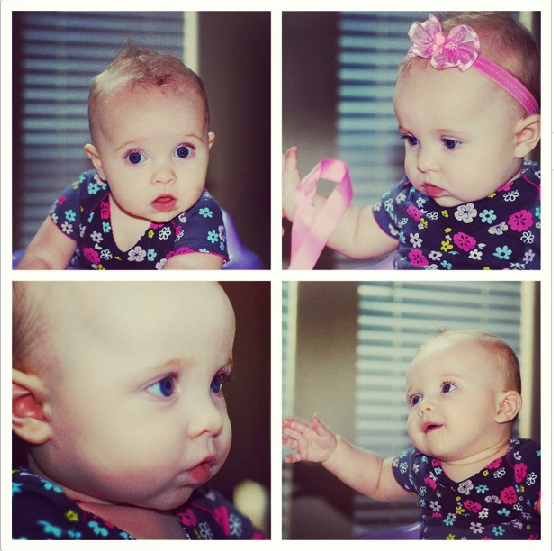
See you tomorrow!
~Cali via LVL
Sunday, October 6, 2013
This Week's Series: Raising Up A Vegan Child
Hello Lovely Readers!
I hope you've all had a wonderful week! Last week was supposed to be our "Raising up a Vegan Child" week, but life got the best of my time and the posts were delayed. That being said -This week's collection of posts will be about raising vegan children/babies. When my hubs and I got pregnant, we decided that our baby would be vegan like us. When the time came for her to decide whether or not she wanted stay vegan, that would be up to her. We would, however, provide her with all of the information needed to make an informed decision. This means we both needed to be knowledgeable on how to raise a vegan child. Now, I am a vegan for both health and ethical reasons. So hubs and I intend to provide both sides to our little girl, when the time is right and she seems ready. That'll be the difficult part of raising a vegan child for me I think.
For now though, raising her up vegan has been relatively easy. I've done quite a bit of research on her dietary needs and what feeding schedules should look like. Below is a list of the most important topics I've found in my research. I'll go into detail with each one with separate posts and provide a list of some websites I've reviewed.
#1) The First Six Months- Breastfeeding vs. Formula
#2) Supplementing Vitamin B-12 is a MUST
#3) A Well Balanced Diet is Key
#4) Timeline For Introducing New Foods
#5) How To Have Fun With Vegan Kiddos
We'll start on Topic #1 tomorrow and address once a day through Friday. If you know of any new parents that are interested in these topics, please feel free to share! Have a wonderful, restful, and lovely rest of your weekend!
:) ~Cali via LVL
I hope you've all had a wonderful week! Last week was supposed to be our "Raising up a Vegan Child" week, but life got the best of my time and the posts were delayed. That being said -This week's collection of posts will be about raising vegan children/babies. When my hubs and I got pregnant, we decided that our baby would be vegan like us. When the time came for her to decide whether or not she wanted stay vegan, that would be up to her. We would, however, provide her with all of the information needed to make an informed decision. This means we both needed to be knowledgeable on how to raise a vegan child. Now, I am a vegan for both health and ethical reasons. So hubs and I intend to provide both sides to our little girl, when the time is right and she seems ready. That'll be the difficult part of raising a vegan child for me I think.
For now though, raising her up vegan has been relatively easy. I've done quite a bit of research on her dietary needs and what feeding schedules should look like. Below is a list of the most important topics I've found in my research. I'll go into detail with each one with separate posts and provide a list of some websites I've reviewed.
#1) The First Six Months- Breastfeeding vs. Formula
#2) Supplementing Vitamin B-12 is a MUST
#3) A Well Balanced Diet is Key
#4) Timeline For Introducing New Foods
#5) How To Have Fun With Vegan Kiddos
We'll start on Topic #1 tomorrow and address once a day through Friday. If you know of any new parents that are interested in these topics, please feel free to share! Have a wonderful, restful, and lovely rest of your weekend!
:) ~Cali via LVL
Monday, September 30, 2013
VIVA SEATTLE!!
Just wanted to send you all a quick little note that i am signing off for a couple of weeks (I think). I may post on some of my adventures in Seattle, but I don't want to over promise and under deliver! On Friday, my husband and I are embarking on a journey to Seattle, WA with my namesake, Aimee, and then we are heading up to Alaska to visit with my sister and my brother-in-law!
Since Seattle is the #2 Vegan Friendly city in the country......

I immediately got on Instagram to try and find some AMAZING Vegan Eats that i hope to check out while we are there!
I found some amazing ideas, and i really hope that it works out for us to stop by these places! My Top Choices:
I cant wait to try out these yummy places! I will let you know what i think when i return!
Until we meet again!
LVL
Amy
Monday, September 23, 2013
Everyday Vegans: MEET DREW
I met Drew a few years ago when we were on a Worship Team together at a church here in the Austin area. He commented on my very 1st post and told me how excited he was that I was making this lifestyle change! He shared his blog with me, and i was SO excited to have him share the 1st 28 days of his Vegan switch with all of you! His point of view is obviously different than the LVL but it is very entertaining and enlightening! I hope you enjoy! Be sure and visit Drew's Blog (Link Below).
**We would LOVE to hear from you. Please share your story with us lovely.vegan.ladies @ {gmail}.com**
**We would LOVE to hear from you. Please share your story with us lovely.vegan.ladies @ {gmail}.com**
LVL
Amy
This Ain’t a Diet; It’s a Lifestyle!
It occurs to me as I write this that I am neither a lady, nor am I what most people would consider “lovely,” but I am in fact a vegan. I guess one out of three at least qualifies me to be a part of the discussion, and I’m happy to have the opportunity to share some valuable information that my wife and I have discovered during our journey. Hopefully most of the readers here will be able to overlook my complete lack of fashion sense and will find some form of encouragement by reading about my family’s recent lifestyle overhaul.
We are vegans . . . and I can personally testify that it is a responsible, affordable, and practicable way of life. A few months ago, I probably would have been among those who tend to categorize veganism as weird attention-seeking behavior or an idealistic, but unsustainable, life choice. As Amy wrote in her initial post, very few people are well informed about what it means to be a vegan, and because of that, there’s a stigma attached to it. To be brutally honest, the fear of what people would think was my wife’s and my biggest cause for hesitation, and even as we wrap up month two of the transformation, we still aren’t quite sure how to broach the subject with certain friends and family. I guess that will get better with time as we discover new ways to communicate the reasons behind our choice.
That brings me to a description of our particular brand of veganism. You will not find us at a local PETA rally advocating for animal rights. In fact, I might be one of the world’s only vegan hunters (more on that in a moment*). We did not make this decision to save the planet, though I’m always pleased when I read the statistics on the reduced carbon footprint, the additional grain available for impacting third world hunger, and the many other environmental benefits made possible by a vegan lifestyle. [This is a good source: http://www.veganoutreach.org/whyvegan/environment.html]
My wife and I initially made this choice for health reasons alone when we became aware of the overwhelming body of medical research that suggests a plant-based diet as the single most effective way to avoid heart disease, hypertension, Type II diabetes, most types of cancer, and Alzheimer’s disease. If you haven’t yet seen the documentary, Forks Over Knives, I strongly suggest checking it out. This stuff has been out there for decades, but the American marketing machine is so distracting that very few people are aware of it. As I write this, my family and I have been living a low-fat
vegan lifestyle for the past six weeks, and though you can learn more about the back story on my blog at http://www.risetomanhood.com/plantbaseddiet/, my main goal is to share some of the most helpful things that we’ve learned as we’ve made the transition to a low-fat, plant strong diet:
1. Being a vegan takes planning and forethought.
After our insecurities about how we would be viewed when we “came out” to the non-vegan
world, practicality was our next biggest concern. I was really doubtful that we could plan and prepare four to five meal/snack options per day without completely busting our household budget. The catalyst that finally helped me to view it as possible was Rip Esselstyn’s book, The Engine 2 Diet. Rip includes recipes for vegan versions of everyday meals, he offers guidance regarding pantry and
fridge makeovers, and he even provides a meal-planner and accompanying grocery list for those
who need extra support to get through his 28 day plant strong challenge.
Though the first shopping trip was significantly more expensive than what we had been used to
(about double) because we had to stock up on necessary but longlasting
staples, we’ve found that our weekly grocery bill is now very close to what it had been before. Sometimes it’s even less. Every Sunday afternoon my wife and I sit down to peruse vegan cookbooks, checked out from the library or loaned to us by friends, and we plan out breakfast, lunch, snacks, dinner, and sometimes dessert for each day of the upcoming week. We tally the necessary ingredients, and one of us makes the trip to the local H.E.B. grocery store, where we’ve been able to find almost everything that we need. Every now and then we have to make a run to a specialty grocery store for an item or two, but these are elective items that we could forgo if we wanted to.
2. If there’s not at least one person in your household who is willing to cook A LOT, it’s going
to be tougher to live as a healthy vegan.
We’ve found a few good options around town for dining out, but these only account for about one
meal in thirty. Chipotle, Subway, and Jason’s Deli have some great vegan options that we’ve really
enjoyed. However, if you also want to keep an eye on fat content, processed ingredients, and your
pocketbook, start compiling a list of homecooked recipes that you really enjoy. Some of my
favorites are listed in the comments section of my blog. Rip’s guideline for every ingredient you purchase at the grocery store is that the ratio of total fat/calories cannot exceed 2.5 grams/100 calories. The real work is done while reading labels in the grocery aisles.
3. Vegans can be serious athletes.

Tough Mudder 2013
If you read Rip’s book, you’ll discover that he was a top triathlete while eating a vegan diet. Several
other high profile athletes have also discovered the benefits of eating this way: Dave Scott, Carl
Lewis, Martina Navratilova, Tony Gonzalez, Venus Williams . . . need I go on?
I CrossFit twice a week, I play indoor soccer in a local league, and I’m training for my second Tough
Mudder obstacle race in October of 2013. I cannot afford to eat in a manner that does not
adequately support muscle growth and maintenance. My CrossFit coach was initially very
concerned about my protein intake when I told her about our choice to go vegan, so I started
counting daily protein grams to appease her. Though there are a lot of differing opinions about the
level of protein intake that is truly necessary for an active person, I’ve settled on 1.3 grams of
protein/kilogram of body weight as my target**. This means that as a 195 pound
man, I try to eat 115 grams of protein daily. This goal is easily achievable most days, and I do not use supplements of any kind to get there***. If this is a concern of yours, it just needs to be a factor in your meal-planning process.
4. Young children can adapt to a vegan lifestyle.

Drew & Family at Disney World
friends and family who are not vegans. We allow them to eat whatever they are served, but we feed
them vegan meals at home and pack vegan lunches and snacks for school.
5. You can be healthier than you ever imagined by making this single change.
Though my family’s goal in changing the way we eat was never motivated by weight loss or
appearance, those things have absolutely changed for the better. In six weeks, I dropped from 208
to 195, while gaining significant strength, endurance and recovery ability! I’m killing CrossFit
workouts on a weekly basis, I can recover adequately enough to go play an indoor soccer game a
few hours after having completed a CrossFit workout, and I’m running like I never knew I could. The
other day I went out for an impromptu run because I had a bunch of pent up energy. Before I knew
what had happened, I had run about 6 miles. I wasn’t really all that tired, but it shocked me so
much that I forced myself to stop. It’s amazing what eating real, wholesome food can do for your
level of fitness! Granted, I was already training regularly, but the fuel that I was putting into my body
catapulted me to the next level.
I could probably keep writing for several additional pages detailing how excited I am about this change in our lives, but I’ll force myself to stop once again.
I’ll leave you with some incredible resources on which we’ve come to rely for meal-planning support:
http://engine2diet.com/
http://happyherbivore.com/
http://ohsheglows.com/
Visit the sites, and get the cookbooks.
You’ll find out just how easy and tasty vegan cooking can be!
Disclaimers:
* I have been a hunter for years, and I am convinced that eating the meat from wild game is 1000%
healthier than eating most of the factory farmed junk in your grocery store’s meat and dairy sections.
No growth hormones, no genetically modified organisms, no forced cannibalism, no cramped living
conditions. Because we believe that animals taken in the field have lived a healthier, more peaceful life than your average chicken or dairy cow, we feel OK about supplementing our vegan diet with wild game ONCE OR TWICE PER MONTH. It still contains saturated fat, cholesterol, and animal proteins that we are trying to avoid in our daily regimen, so we use it very sparingly.
** Formula for protein target: Weight in pounds/2.2 = weight in kilos. Multiply by 0.8 for a sedentary
lifestyle. Multiply by 1.0 to 1.5 to range from active to hardcore
strength or endurance training.
*** Though I do not use protein supplements, I make sure that our whole family gets a supplement of
nutritional yeast mixed into regular meals several times per week. It provides several important
nutrients, but the main concern is adequate intake of Vitamin B12, which cannot be obtained from plant sources.
Subscribe to:
Posts (Atom)